
Winter Newsletter 2020-2021
Take away the noise, take away the hurried life so many have unwittingly embraced
and only then can the mind truly open. ~ Anonymous

For almost one year now humans have been forced into a privileged opportunity: To live amongst loved ones who are always there or to confront loneliness that has long been waiting in the corner. It is the dichotomy of an unprecedented time.
Now that winter is upon us and the weather can no longer entertain social yearnings, this opportunity presents itself yet again. As the weather turns more frigid, welcoming winter once again, we go inside to listen to the silence as 2020’s final bow. Part of that silence is listening to the body. Hearing all the clues it often conveys but so many are too pre-occupied to notice. It also means strengthening and maintaining a body that may be running on all cylinders.
Merging seasons with systemic health has been the cornerstone of optimal functioning, particularly when naturopathic medicine and acupuncture are applied. Take what may seem like a time of struggle and ‘flip the script’ to use all that winter offers to enhance quality of life.
Flow with H20
Yes, yes it has been advised over and over to drink more water. Well, during the winter season it may be the most important time. Not only is Water the associated element of winter but so is Kidney and Bladder. Keeping the kidneys and bladder well filtered by drinking a good dose of water (about 6-8 glasses) per day may enhance your winter experience. Here are three essential reasons to drink water this winter.
- Ease Winter Phlegm – One part of winter is how the body may produce phlegm in the sinus cavity, nasal passages, throat, and lungs. When this occurs, drinking water is an essential part of helping your immune system ramp up to full capacity. Julie Metos, Registered Dietitian at the University of Utah commented, “…if you have a head cold, or if it’s [mucous/phlegm] in your lungs, it [water] helps thin out the mucous. So you can put a steamer in your room or drink more water. All of those are good for making you feel better.”
- Protect Kidney Qi – Classical Chinese Medicine (CCM) teaches the strengths and weaknesses of the human body. Kidney is considered to hold the lion’s share of the vital life force called “Qi”(pronounced: “chee”). The winter months are known to deplete Kidney Qi until spring when the body can rejuvenate. Rather than go through winter experiencing Kidney depletion to the point that exhaustion replaces vitality, simply consuming a good water protocol may significantly help.
- Preserve Sexual Energy – Struggling with a sexual energy compromise often means that Kidney is imbalanced which, as mentioned, can often happen during the winter months. This can be a major factor for conditions such as low libido, erectile dysfunction, impotence or even infertility. Keeping hydrated can alleviate some of these challenges while applying CCM at the same time.
The fundamental principals of the Water element are: rest, reflection, conservation, and storage. By following these and the water consumption principles above for applying to the season of winter offers optimal health and spring rejuvenation.
Elemental Acupuncture
Stoking the constitutions of winter by filling or emptying acupuncture meridians can be highly advantageous to winter health. The filling or energizing would be required if the Qi energy where too weak and needed vitality while the emptying or releasing would be applied where energy is too abundant and needed calming.
An imbalance of the Water element could create a difficult challenge during the winter months. Some symptoms associated with a Water imbalance include:
- Knee pain
- Resistance to change
- Fear
- Anxiety
- Low back pain
- High blood pressure
- Occipital (back of head) Headaches
- Sexual problems – Vaginal dryness, premature ejaculation, erectile dysfunction
- Urinary retention
Harvard University posted results from a study of acupuncture and its effect on systemic inflammation which stated that,
“…acupuncture activated different signaling pathways that triggered either a pro-inflammatory or an anti-inflammatory response in animals with bacterially induced systemic inflammation.
Using acupuncture to change the energy that may be causing a water imbalance could be highly effective. Overall, during the winter months it is essential to keep the body warm while stoking the ‘pilot light’ of Qi to keep at-the-ready for when spring requires an energy catapult.
Warming Winter Soups
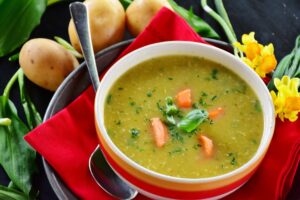
There is nothing like eating a warm soup during the winter months. It envelopes the insides like a blanket thrown over the organs. Below are two soup recipes that correlate with the food and organ associations of winter. Share with family and friends for an invigorating seasonal boost that stokes the immune system and calms the mind.
Winter Sunshine Soup
*Recipe courtesy of Five Seasons Acupuncture
Ingredients:
1 cup yellow split peas, soaked
2 quarts water
1 5-inch piece of soaked kombu (brown seaweed used in Japanese cooking)
1/2 onion, cut into crescent moons (optional)
2 carrots, cut into flowers
1 cup winter squash, diced
1/2 cup parsley, chopped
1/4 teaspoon salt
Preparation:
- Place kombu and peas in a pot with water.
- Bring to boil. Reduce heat and simmer 30 minutes.
- Add onions, carrots, squash, and salt. Simmer until peas and vegetables are tender.
- Add miso diluted in stock and simmer 5 minutes more.
- Serves 6-8
Chick Pea Miso Soup with Celery Root and Scallops (or Vegan Substitute)
*Recipe courtesy of Body Mind Wellness Center
Ingredients
1 cup scallops or other sea food or vegan substitute
1 cup chopped celery root
1 cup chopped burdock root
1/2 cup white, brown, or fresh shitake mushrooms
1 cup small broccoli florets
4″ piece of kombu sea veggie, cut into pieces
4″ piece of wakame sea veggie, cut into pieces
1-2 slices ginger root
2-3 chopped scallion
2 quarts water
1 tbsp chick pea miso paste or mellow white if unavailable
1 tbsp sweet white miso paste or more to taste
Dash of white pepper if desired
Directions:
Bring water to boil and add the root and sea veggies. Cook on a medium high boil until the roots are soft and the wakame has dissolved into beautiful dark pieces.
Add the sea food (or vegan substitute) and mushrooms and cook on a low boil for around 10 minutes depending on the sea food. Cook until almost all done and turn flame down to simmer.
Stir the miso paste into 4 oz. of water in a cup or small bowl and make a thick liquid. Add this miso liquid with the broccoli florets and scallion, and simmer for 5 minutes.
Serve with Buckwheat Soba noodles or just by itself for a low carb alternative.
Wise Winter Wellness
The following is a winter wellness protocol list that could make all the difference in priming the body for its spring debut.
- Sun Salutation – Go to bed early, wake to warming rays allowed through open drapes
- Hibernate – As the earth shuts down and goes into a state of storage, so should humans
- Don’t Sweat It – Avoid sweating during winter, this systemic response can weaken Kidney
- Go Bitter – Decrease salty foods and increase bitter ones: Broccoli, Brussel sprouts, cabbage, kale, radishes and arugula. Also, cranberries, citrus peel and unsweetened cacao.
- Nourish Yin – Yin qi is at the surface so nourish it with seasonal foods, acupuncture, and meditation.
- Clear Heat – Helping the body clear inner heat can be highly advantageous for Kidney. A study published in the Journal of Traditional Complimentary Medicine found heat clearing herbs to possess anti-inflammatory properties. Some heat clearing herbs recommended include: dandelion, echinacea, and honeysuckle flower. Chinese herbs include: Scutellaria baicalensis, Coptis chinensis, and Isatidis folium.
- Immune Boosting Herbs – As yang energy is at its weakest, it is imperative to do everything possible to boost the immune system through such applications as: black elderberry, oregano oil, and olive leaf extract
News and Noteworthy
Keep on the pulse of current naturopathic applications for optimal health.
Adaptogenic herbs
There is a subset of herbs that fit into a category called adaptogens. Adaptogens are botanical compounds able to interact with the stress response system known as the hypothalamic-pituitary-adrenal (HPA) axis.
According to Functional Medicine Doctor & NY Times bestseller, Frank Lipman, MD,
“By supporting adrenal function, they [adaptogens] can help counteract the adverse effects of stress and help maintain balance in the body.”
4 powerful adaptogens are:
- Ashwagandha – Lowers the stress hormone cortisol and helps manage winter blues.
- Cordyceps – This mushroom genus helps muscle recovery and relieves fatigue.
- Holy Basil (Tulsi) – Strengthens blood pressure and overall stress response.
- Rhodiola Rosea – Promotes endurance and manages fatigue.
Acupuncture Helps SAD Inflammation
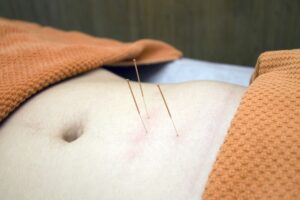
The Association of Accredited Naturopathic Medical Colleges (AANMC) explores the link between immune health and seasonal affective disorder (SAD).
In a study of immune response inflammation association with SAD and light therapy treatment published in the Journal of Affective Disorders it was concluded that,
“Our results of increased IL-6, IL-6xsIL-6R, and sIL-2R [inflammatory markers] in patients with SAD suggest an activation of the immune-inflammatory system in winter depression, which is not altered by 2 weeks of successful light therapy.”
If SAD light therapy is not successful, try acupuncture. Acupuncture has long been used in both traditional and conventional medicine for not only inflammation but it may also treat SAD.
Skya Abbate, D.O.M. comments to Acupuncture Today regarding SAD treatment,
“Personally, I have found the primary point in the treatment of seasonal affective disorder to be yintang. Yintang is located at the glabella, between the medial ends of the two eyebrows. Deeply, posterior to the pituitary gland, at the base of the hypophysisis [pituitary gland] lies the pineal gland, which responds to light and seasonal changes. When light levels are low, the pineal gland secretes melatonin, a hormone that it also manufactures, which is involved in the regulation of sleep and mood disorders. It has the effect of sedating the body and promoting sleep. Hence, during seasons of low light, the pineal gland constantly produces melatonin and a sleepy state is induced. By needling yintang, the pineal gland can be stimulated such that both lethargy and depression are decreased…Many patients have reported to me that they believe it has changed their mindset and alleviated depression, allowing them to be more relaxed yet invigorated. One patient I recently treated effectively with SAD referred to this as the “heaven point” as soon as I would needle it.”
At Integrative Med Solutions, we will design a winter season acupuncture and naturopathic treatment program that works for you. In many cases, insurance covers portions of the acupuncture treatment. Allow us to support you to achieve optimal health. To make an appointment or find out more about how acupuncture and naturopathic medicine can benefit you, please call our office at 914.337.2980 or Click Here to schedule an online appointment.
*Please Click Here to see a current list of Insurance Companies that commonly carry acupuncture benefits for its members. Please call 914.337.2980 or securely email
Best in Health from IMS!